
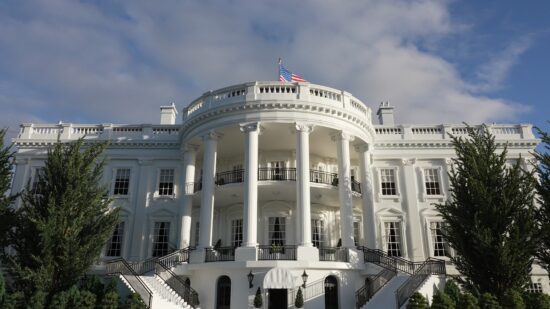
The most visible construction project in America is back in the news with a federal appeals court affirming a preliminary injunction against above-ground construction on the new ballroom at the White House. The court found that the president had exceeded his authority by starting construction on public property without the necessary funding and approval from Congress. According to the court, the U.S. Constitution provides that Congress has exclusive authority over construction at “The People’s House,” and it has not delegated that authority to its chief resident.
The case is a textbook example of separation of powers at work in the U.S. federal system: the judicial branch reviewing and enjoining actions of the executive branch under the Constitution and laws of the legislative branch. As the court explained:
It is Congress’s job to ensure that any major construction and security projects at the White House will protect the safety of all Presidents, present and future, while preserving the historical and architectural significance of that unique location. Congress cannot perform its constitutional function when the Executive chooses to proceed wholly unilaterally. The separation of powers, after all, exists not to protect the Branches [as] Branches, but to ensure and preserve the liberty of the people of the United States.
The case also provides an interesting historical perspective on the design of our nation’s capital. The founding architect of the capital city, Pierre L’Enfant, designed the city to focus on the Capitol building — “the gleaming palace of the people in the new democracy” — and to contrast it with the “simple humility” of the White House. The court found that the planned 90,000- square-foot ballroom would frustrate that intent and cause irreparable harm if a preliminary injunction were not issued. The injunction does not prohibit construction that is below ground, security-related, or necessary to secure the site. The ruling is stayed 14 days to allow the defendants to appeal to the U.S. Supreme Court.
A full copy of the court’s opinion is available here.
UPDATE: On August 21, 2026, the U.S. Supreme Court entered a one-line order further extending the stay of the lower court’s injunction.