In a sweeping and unprecedented enforcement action, the Small Business Administration (SBA) has dramatically escalated its oversight of the 8(a) Business Development Program — reportedly leaving more than 1,000 small businesses suddenly sidelined and raising serious questions about procedural protections and appeal rights.
The December 2025 Document Demand
In December 2025, SBA issued a blanket directive to all approximately 4,300 participants in the 8(a) Program, requiring each contractor to submit three years’ worth of financial and corporate documentation for agency review. SBA framed the demand as part of an effort to identify “pass-through” abuse and shell companies allegedly exploiting the program’s benefits without meeting its ownership, control, and performance requirements.
SBA’s request applied uniformly to every 8(a) contractor — without individualized findings, advance notice of specific concerns, or tailoring based on risk factors. Contractors were given a short compliance window during a period that coincided with year-end financial closeouts, holidays, and ongoing contract performance.
January 2026: Over 1,000 Contractors Suspended
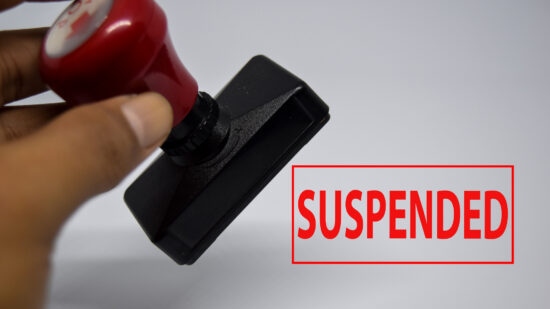
In January 2026, SBA announced that it had suspended more than 1,000 8(a) contractors from program participation for failing to submit the requested documents. For affected businesses, the consequences were immediate and severe:
- Ineligibility for new 8(a) awards
- Removal from pending sole-source and competitive 8(a) procurements
- Heightened scrutiny from contracting officers and agency customers
- Potential reputational harm with little public explanation
Notably, many of the suspensions appear to have been issued automatically, based solely on non-submission, rather than a substantive finding of fraud, affiliation, or program ineligibility.
Suspension Is Not Termination — but the Impact Is Real
While SBA characterizes these actions as “suspensions” rather than terminations from the 8(a) Program, the practical effect can be nearly identical — particularly for firms that rely heavily on 8(a) work. Suspension cuts off access to the program’s core benefits and can cripple pipeline opportunities overnight.
Importantly, a suspension for failure to provide requested information is procedurally distinct from a termination for cause. That distinction matters when evaluating what rights contractors have — and what remedies may be available.
Appeal Rights for Suspended 8(a) Contractors
The key legal question now facing affected contractors is whether — and how — they can challenge SBA’s action.
SBA Office of Hearings and Appeals (OHA)
Under SBA regulations, certain adverse 8(a) eligibility determinations, including suspensions, are appealable to SBA’s Office of Hearings and Appeals (OHA) within 45 days after the concern receives the Notice of Suspension.
If SBA frames the action as a temporary suspension for failure to submit information (rather than a formal suspension, a determination of ineligibility, or termination), SBA may take the position that OHA lacks jurisdiction. That position is likely to be contested — particularly where the suspension is indefinite in duration or functionally equivalent to a termination.
Contractors should scrutinize their suspension notices carefully. The label SBA uses is less important than the substance and effect of the action.
Requests for Reconsideration or Cure
In many cases, the most immediate remedy may be administrative rather than appellate. Contractors who can promptly cure the alleged deficiency — by submitting the requested documents or demonstrating good cause for delay — may seek reinstatement directly from SBA.
However, contractors should proceed cautiously. Submissions made in haste, without legal review, can create new risks, including admissions or inconsistencies that invite further scrutiny.
Due Process Challenges
Where SBA imposed suspension without meaningful notice, a reasonable opportunity to respond, or individualized findings, contractors may have viable due process arguments. Courts and tribunals have repeatedly held that agencies cannot deprive businesses of significant benefits without affording basic procedural protections — especially where participation in a government program is central to the firm’s livelihood.
In extreme cases, contractors may explore relief outside SBA, including claims under the Administrative Procedure Act if agency action is arbitrary, capricious, or contrary to the law.
Practical Takeaways for 8(a) Contractors
This episode underscores several hard lessons for 8(a) participants:
- Do not ignore SBA information requests, even if they appear overbroad or burdensome.
- Document all communications and submission attempts with SBA.
- Assume enforcement is accelerating, not slowing, in 2026.
- Consult counsel early — before submitting large volumes of financial data or responding to suspension notices.
- Pay close attention to appeal deadlines, which cannot typically be extended. Move quickly to pursue administrative remedies to comply with 45-day appeal deadline.
Looking Ahead
SBA’s suspension of more than 1,000 8(a) contractors reflects a significant shift in the agency’s enforcement activity. Although addressing fraud is an established government responsibility, the scope and pace of these suspensions highlight important questions regarding proportionality, procedural consistency, and the availability of meaningful review.
In the near term, 8(a) contractors should anticipate heightened scrutiny and take steps to understand and preserve their procedural rights as the agency continues its enforcement efforts.
If your company has been suspended by SBA, please feel free to contact Aron Beezley or Nathaniel Greeson to discuss your rights and potential avenues for relief.