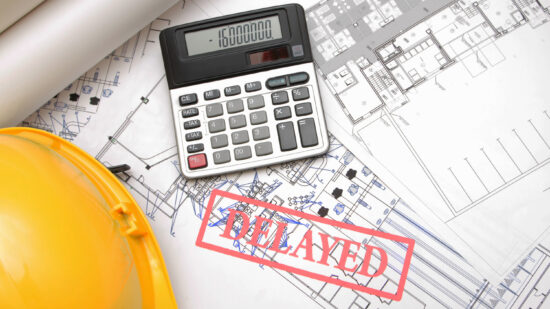
Recent reports and contractor experiences suggest that the U.S. Agency for International Development (USAID) has, in some instances, failed to timely pay contractors for work that has already been performed and accepted. While payment delays are not unprecedented in federal contracting, prolonged or systemic nonpayment raises serious legal and practical concerns — particularly for contractors operating overseas or on thin margins.
For affected contractors, the good news is that nonpayment by the government is not merely a business inconvenience. It may give rise to enforceable legal claims under the Contract Disputes Act (CDA), with the potential — if liability is established — for ultimate payment through the Judgment Fund.
The Government’s Obligation to Pay
As a baseline matter, the federal government is contractually obligated to pay contractors in accordance with the terms of their contracts and applicable payment statutes, including the Prompt Payment Act. When a contractor performs in compliance with the contract and the government accepts that performance, payment is not discretionary.
If USAID has accepted deliverables, services, or milestones but has failed to issue payment within the required timeframes — or at all — that failure may constitute a breach of contract or give rise to a claim for unpaid amounts, interest, and potentially other damages.
Recourse Under the Contract Disputes Act
The CDA provides the main mechanism for resolving most monetary disputes arising under federal contracts. Importantly, a contractor does not need to wait indefinitely for the agency to resolve internal funding or administrative issues before invoking the CDA process.
A typical path forward includes:
- Submission of a Certified Claim – The contractor submits a written claim to the contracting officer seeking payment of the amounts due. For claims over $100,000, the claim must be certified.
- Contracting Officer’s Final Decision (or Deemed Denial) – The contracting officer is required to issue a final decision within a specified timeframe. If the contracting officer fails to do so, the claim may be deemed denied, allowing the contractor to proceed.
- Appeal or Suit –The contractor may appeal the denial (or deemed denial) to the appropriate Board of Contract Appeals or file suit in the U.S. Court of Federal Claims.
Notably, an agency’s lack of available funds does not excuse nonpayment for accepted work, nor does it defeat jurisdiction under the CDA.
Interest and the Cost of Delay
Under the CDA, interest accrues on contractor claims from the date the claim is submitted until payment is made. Thus, payment delays can materially increase the government’s financial exposure — particularly where large sums or extended delays are involved.
This statutory interest provision is intended to discourage agencies from delaying payment and to compensate contractors for the time value of money lost due to government inaction.
The Judgment Fund as a Backstop
One concern contractors often raise is whether an agency that is struggling to pay invoices will be able to satisfy an adverse judgment. In many cases, the answer lies with the Judgment Fund.
The Judgment Fund is a permanent, indefinite appropriation administered by the U.S. Department of the Treasury and is available to pay certain final judgments and settlements against the United States, including those arising from CDA litigation. While agencies may later be required to reimburse the fund, payment to the contractor does not depend on the agency’s immediate budgetary situation.
As a result, even if USAID lacks current appropriated funds to pay outstanding invoices, a contractor that prevails through the CDA process may still ultimately be paid via the Judgment Fund.
Strategic Considerations for Contractors
Contractors facing nonpayment should carefully consider:
- Documenting Acceptance and Performance – Evidence that the government accepted the work is important.
- Preserving Rights – Delaying too long before submitting a claim may complicate recovery.
- Interest Accrual – Early submission of a proper claim can start the CDA interest clock.
- Global Operations Risks – For overseas or humanitarian contractors, prolonged nonpayment can threaten ongoing operations, making prompt legal action especially important.
Conclusion
USAID’s failure to timely pay contractors is more than an administrative hiccup — it may constitute a legally actionable breach with meaningful remedies. The Contract Disputes Act provides a well-established path for contractors to seek recovery, and the Judgment Fund serves as a powerful backstop to ensure that valid claims are ultimately paid.
Contractors experiencing prolonged nonpayment should assess their options early and consider whether pursuing a CDA claim is necessary to protect their financial and legal interests.
If the government is delaying payment to your company and you would like to explore potential avenues for recovery, please do not hesitate to contact Aron Beezley, Nathaniel Greeson, or Eugene Benick.